
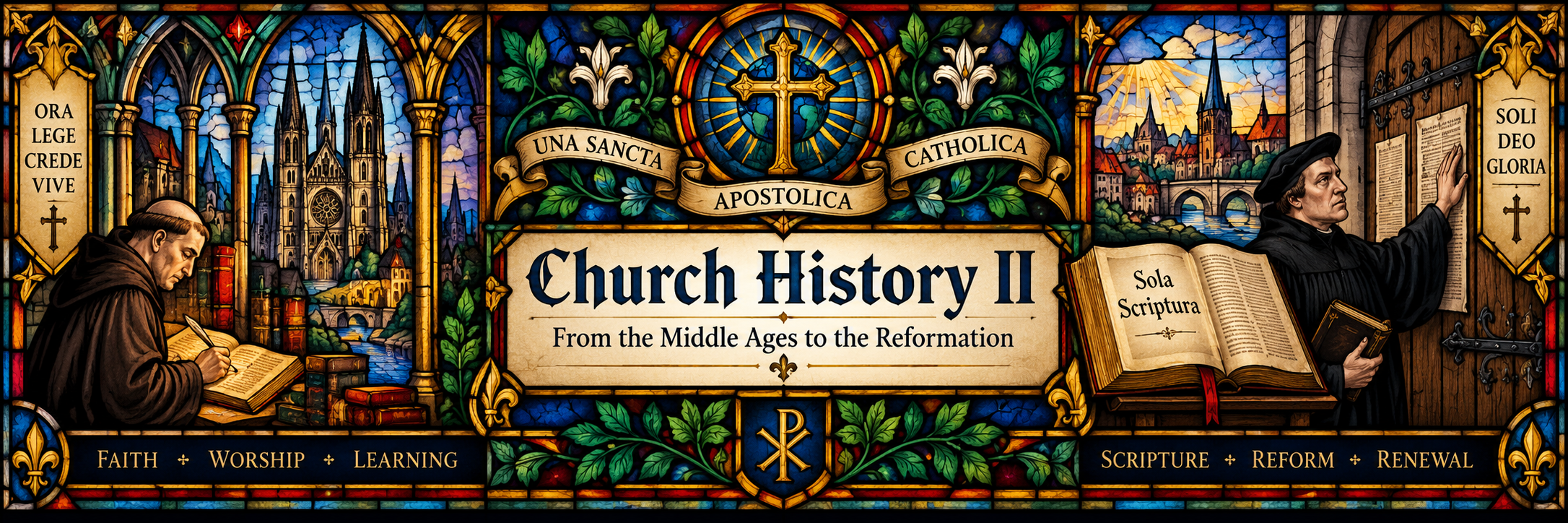
This course traces the major theological developments and historical events from the Middle Ages through the Protestant Reformation. As we study the medieval church, we will recognize its important contributions while humbly remembering that the church also committed serious errors that required correction. Early reformers such as John Wycliffe and Jan Hus questioned established teachings and practices, helping prepare the way for the Reformation. Martin Luther’s Ninety-Five Theses of 1517 are commonly regarded as the formal beginning of the Protestant Reformation, but Luther was not alone. Huldrych Zwingli led an independent reform movement in Zurich, while William Tyndale, influenced by the Reformation, advanced the translation of Scripture into the vernacular. The Reformation found one of its fullest theological expressions in John Calvin’s “Institutes of the Christian Religion.” We will also examine movements such as the Anabaptists and Puritans and consider how these events continue to shape Christian theology and church practice.
- Teacher: John Rhee